


Team K9 Tips
The Two-Towel Reset Before Your Dog Jumps Back In
Catch the wettest mud before the car door closes, give the mess one protected place to land, and save the deeper cleanup for later.
Quick answer
If your dog comes back muddy, do not wait until the whole ride is over. Pause beside the car, wipe the wettest mud off first, then load your dog onto a protected back-seat surface so the rest of the cleanup stays smaller.
A muddy walk can still be a good walk. The part that gets frustrating is the reload. The leash is in one hand, the car door is open, the dog is ready to hop back in, and the mess starts moving faster than you do.
This is where a tiny repeatable routine helps more than a big promise. You do not need a full parking-lot bath. You only need to stop the wettest layer from getting the first win.
What the two-towel reset actually means
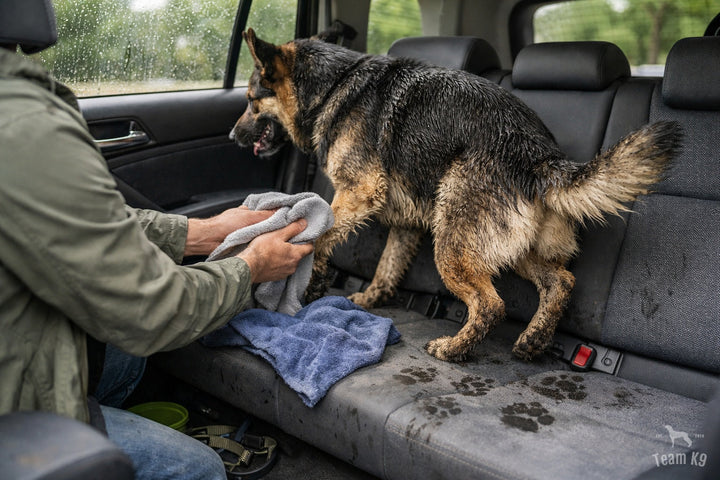
The first towel is for the wet layer you can catch fast: paws, lower legs, and the obvious muddy splash points. The second towel is your backup. It can sit on the landing spot, catch what you missed, or handle the small follow-up wipe once your dog is loaded and calmer.
The point is not perfection. The point is to keep one muddy moment from turning into a whole-car cleanup problem.
Step 1: Put the first towel in your hand before you open the door wider
Keep hold of the leash, pause at the car, and grab the towel before your dog starts climbing in. Wipe what will transfer first: front paws, lower legs, belly edge if it is easy to reach, and any thick mud clinging low on the coat.
If your dog already dislikes paw handling, do not turn this into a wrestling match. Work within the handling routine your dog already knows. A partial wipe is still better than waiting until the whole back seat takes the hit.
Step 2: Give the mess one place to land
A protected landing zone keeps the next layer off the upholstery. The simplest version is a ready back-seat base that can take damp paws without becoming the car itself. Team K9 owners already using the hard-bottom car seat cover have a wipeable place for that first jump back in, which is exactly when the mess spreads fastest.
If you want the broader setup behind that landing zone, read The Dog Car Setup That Keeps Your Back Seat Cleaner. This page is the narrower move that happens right before the dog loads back in.
Step 3: Reload calmly, then finish the small follow-up wipe
Once your dog is back on the protected surface, take one more look. If a paw missed the first wipe, if mud hit the door side, or if the second towel needs to catch the remaining dampness, do it now while the mess is still contained.
If your ride routine also uses a clip-in step, do it after the muddy paws are handled and your dog is settled enough to stand or turn without making the cleanup harder.
When this routine works best
- Trailhead reloads after wet grass, dirt, or light rain.
- Park-day rides home when paws look fine at a glance but still carry damp grit.
- Short errands after a muddy yard or field stop.
- Any car routine where the back seat is protected but the first jump-in still creates the biggest mess.
When to stop and keep it smaller
If your dog is overaroused, hot, or struggling with handling, shrink the job. Catch what you can, load back in safely, and save the deeper reset for home. Better to do a small clean useful step than force a bigger routine your dog cannot handle well in that moment.
For the after-the-ride cleanup once you get home, read The 3-Minute Backseat Reset After A Muddy Ride. That article picks up where this one stops.
The Team K9 takeaway
The cleaner ride home usually does not start with a giant cleanup plan. It starts with a short pause before the car door closes all the way. One towel in your hand, one protected place to land, and one smaller mess to deal with later.
If muddy days are common at your house, build the repeatable car routine first, then add the product support around it. That order keeps the article honest and keeps the setup useful.


 “My dog slides into the footwell”
 “Hair and mud end up all over my back seat”
 “My dog pulls on every walk”



Leave a dog-parent field note
Share what your dog does, what you already tried, or what you wish this guide covered. Notes are moderated before they appear.
Send the Team K9 crew the dog behavior, car setup, walk problem, or routine question you want covered next.
Email a field note