


Senior dogs still want a life that feels interesting. They may move slower, rest longer, or need more recovery between activities, but that does not mean their curiosity disappears. In many homes, the problem is not that an older dog has become lazy. It is that their routine quietly shrinks until the day feels too predictable: wake up, eat, short walk, nap, dinner, bed, repeat.
If you are wondering how to keep a senior dog mentally stimulated, the goal is not to create a boot camp. The goal is to give your dog small, safe ways to think, sniff, choose, and participate without asking too much from an older body. That is where simple brain games, slower routines, and low-impact enrichment can make a real difference.

How do you keep a senior dog mentally stimulated?
Use low-impact enrichment your dog can win at: tiny daily jobs, easy scent games, food puzzles, slower sniff walks, and short training sessions built around cues that do not ask for hard movement. Keep the routine flexible, watch for signs of fatigue, and make comfort part of the setup instead of an afterthought.
Older dogs often need a different kind of challenge, not less life
When a dog gets older, many owners naturally remove the things that once created stimulation: longer adventures, harder play, busy training sessions, new places, and more variety. That instinct usually comes from love. But if nothing meaningful replaces those experiences, some senior dogs become flat, restless, clingier, noisier at odd times, or less engaged with the household. Mental work can help fill that gap when it is gentle, predictable, and easy to succeed with.
1. Give your senior dog a small daily “job”
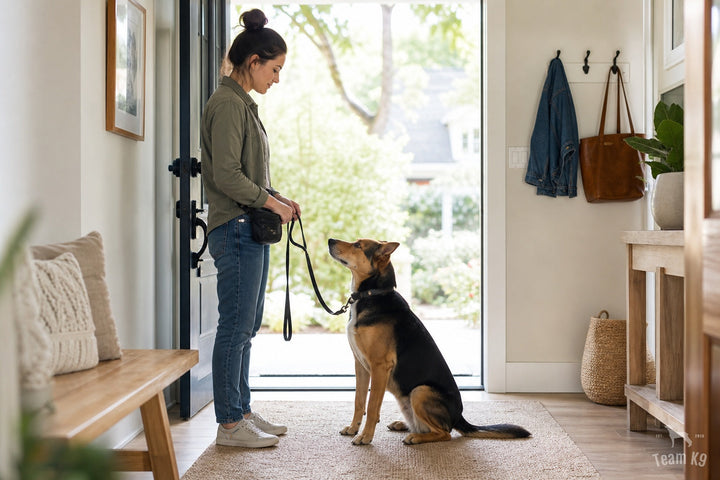
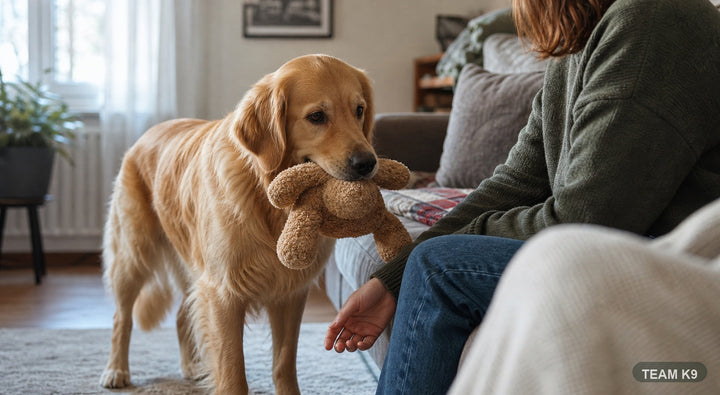
One of the easiest ways to keep an older dog mentally active is to stop thinking in terms of “exercise only” and start thinking in terms of participation. A job does not have to be impressive. It can be touching your hand before dinner, waiting calmly while the leash gets clipped, finding a treat near the couch, carrying a toy back to bed, or stepping onto a mat before the door opens.
These tiny routines matter because they ask your dog to notice, choose, respond, and succeed. That kind of engagement can be more realistic for an older dog than anything fast, loud, or physically demanding. It also gives structure to the day, which helps many senior dogs feel steadier.
The biggest mistake here is making the game too hard too quickly. If your dog has changes in hearing, vision, smell, balance, or mobility, difficult setups can feel discouraging instead of enriching. Start with simple wins and let confidence build first.
2. Turn meals into low-impact enrichment
Mealtime is one of the best places to add brain work because your dog is already motivated. Instead of dropping every meal into the same bowl in the same spot, use part of the food to create easy sniffing and problem-solving moments. A towel scatter, a snuffle mat, a slow feeder, or a few pieces of kibble hidden around one room can all create useful mental work without asking your dog to run or jump.
This matters for senior dogs because sniffing and foraging can satisfy natural instincts while staying gentle on joints. It also slows the pace of the meal and helps the dog feel involved in the process instead of just waiting for the bowl to appear.
Keep the setup honest. If your dog is frustrated by puzzle toys, downgrade the difficulty. If chewing is weak, use softer food options approved for your dog. If your dog tires easily, enrich a portion of the meal and keep the rest simple. The point is useful engagement, not making the dog “work for everything.”

The 5-minute senior dog enrichment reset
- Pick one easy win. Use a game your dog already understands or can learn in one session.
- Keep the setup close to the ground. Avoid unnecessary jumping, spinning, or repeated hard positions.
- Let scent do the heavy lifting. Sniffing is often more realistic than speed for an older dog.
- Stop before your dog fades. End while they still look interested.
- Repeat the activity tomorrow. Familiar success usually beats random novelty.
3. Make walks slower, sniffier, and more mentally rewarding
Many senior dogs cannot handle the same length or pace of walk they once could. That does not mean the walk stopped being valuable. In a lot of cases, a slower sniff walk is more mentally useful than a brisk march around the block. Dogs read the world through scent, and older dogs can still benefit from that information gathering even when their body needs a gentler outing.
Try building in deliberate sniff stops instead of hurrying your dog along. Let them investigate a patch of grass, a mailbox post, or a tree trunk. If the route is safe, let them choose between two directions now and then. Even small decisions can wake up curiosity.
At the same time, watch the body. If your dog is slowing because of fatigue, soreness, heat, confusion, or unsteadiness, do not turn the walk into a test of grit. Shorter and better is often smarter than longer and draining.
If your senior dog also seems clingier, less confident, or more sensitive lately, this related guide can help you separate comfort-seeking from routine drift: Why Is My Dog Suddenly So Clingy?
4. Keep teaching, but choose senior-friendly cues
Older dogs can learn. The phrase about not teaching an old dog new tricks only survives because people often stop trying. What changes is not the possibility of learning. What changes is the shape of the lesson.
Good senior-dog cues are low impact and easy to reward: hand target, watch me, wait, chin rest, go to bed, back up one step, or find it. These cues ask the brain to work without turning the session into a mobility challenge.
Keep training sessions short. Two or three minutes can be enough. Use rewards your dog genuinely cares about. End before they check out. Repetition is still useful, but the emotional tone matters just as much as the cue itself. You want your dog finishing the session thinking, “I can do that again,” not “I hope we are done.”
| Situation | Better senior-dog choice | Why it works |
|---|---|---|
| High-energy trick training | Hand targets, wait, chin rest | Low physical strain with clear mental participation |
| Fast exercise as enrichment | Sniff walks and scent games | Lets the dog explore without overusing the body |
| Complex puzzle frustration | Easy food scatter or towel game | Creates success instead of confusion |
| Random long sessions | Short repeatable reps | More sustainable for older attention and stamina |
5. Build a “memory lane” sniff box at home
If you want one simple senior dog brain game to start with, try a sniff box. Use a shallow box, basket, or low-sided bin and place a few safe familiar items inside: a soft toy, a home-smelling towel, a blanket corner, a leash your dog knows, and one or two easy treats hidden in plain sight or under a fold.
The power of this game is not complexity. It is the chance to investigate, choose, remember, and discover at the dog’s own pace. Familiar scents can feel grounding, while hidden rewards add a gentle problem-solving layer. For many older dogs, this kind of activity is more comfortable than anything that requires speed or repeated posture changes.
If vision is changing, use smellier treats. If mobility is limited, keep everything low and easy to reach. If your dog gets tired quickly, use fewer items and shorter sessions. Enrichment works best when it meets the dog you have today.
Comfort can make enrichment easier to repeat
These are not behavior fixes by themselves. They simply help create softer rest zones and cleaner home setups around older-dog routines.
 Furniture Protector Dog Bed
Use a familiar rest spot with orthopedic padding when your dog needs recovery between enrichment reps.
Furniture Protector Dog Bed
Use a familiar rest spot with orthopedic padding when your dog needs recovery between enrichment reps.
 Water-Resistant Throw Blanket
Helpful when you want a washable comfort layer in the spots your older dog already prefers.
Water-Resistant Throw Blanket
Helpful when you want a washable comfort layer in the spots your older dog already prefers.
 K9 Floor Mat
A stable cleanup zone near doors can make slower senior transitions into and out of walks easier to manage.
K9 Floor Mat
A stable cleanup zone near doors can make slower senior transitions into and out of walks easier to manage.
6. Know when “less engaged” needs a vet check, not more games
Mental stimulation is useful, but it is not the answer to every change in an older dog. If your dog suddenly seems confused, painful, disoriented, unusually restless at night, reluctant to move, or sharply different from their normal self, do not assume they are just bored. Sudden behavior changes deserve a closer look.
The safest approach is simple: enrich what looks stable, and investigate what looks off. If something feels physically driven, confusing, or out of character, talk to your veterinarian before turning the issue into a training project.
That same mindset applies to the home setup. If you are building a gentler daily environment for an older dog, start with comfort and predictability, then layer on enrichment. A steady place to rest often makes everything else easier to practice. If you want a broader browse path, use the Team K9 beds collection here: Dog Beds & Loungers.
Senior dog enrichment FAQs
What are the best brain games for senior dogs?
The best senior dog brain games are low-impact and easy to win at: scent games, easy food puzzles, hand targets, short cue sessions, and simple “find it” routines around one room.
How long should enrichment sessions be for an older dog?
Short is usually better. Many senior dogs do well with two- to five-minute sessions, especially if the activity is mentally demanding or new.
Can senior dogs still learn new things?
Yes. Older dogs can still learn, but the lesson should fit their body and current energy. Low-impact cues are usually a better fit than fast tricks or repeated hard positions.
Is sniffing really enough to count as enrichment?
Yes. Sniffing is meaningful mental work for dogs. Slow sniff walks, scent searches, and easy foraging games can be very satisfying for older dogs.
When should I worry instead of adding more enrichment?
If your dog seems suddenly confused, painful, highly restless, disoriented, or very different from normal, start with a veterinary conversation instead of assuming the issue is boredom.


 “He lunges at other dogs and I dread passing them”
 “My dog pulls on every walk”
 “I want control without a bulky vest”



Leave a dog-parent field note
Share what your dog does, what you already tried, or what you wish this guide covered. Notes are moderated before they appear.
Send the Team K9 crew the dog behavior, car setup, walk problem, or routine question you want covered next.
Email a field note