


Team K9 Tips
Why Dogs Roll In Smelly Things And How To Stop It Early
Catch the shoulder drop, keep the walk fun, and stop the smell before it rides home with you.
Quick answer
Dogs often roll in bad smells because the scent is intensely interesting, instinctive, or rewarding to them. The easiest fix is to let your dog sniff safely, learn the tiny pre-roll warning signs, and redirect before the shoulder hits the ground. If the roll already happened, run a quick car-and-home reset before the smell spreads everywhere.

You know the moment. Your dog is sniffing like everything is normal, then one shoulder drops, the neck bends, and suddenly they are trying to marinate themselves in the worst smell on the block.
It feels random when you are the one holding the leash. Usually it is not random at all. Rolling in gross smells is often the end of a scent-investigation sequence your dog found exciting long before you realized the moment was escalating.
Why dogs do this in the first place
Dogs experience scent more like a full information system than a quick background detail. One patch of grass can hold traces of wildlife, food, another dog, old rainwater, mud, or something decaying nearby.
Some dogs seem drawn to those smells because of instinct. Some do it because the odor is stimulating and rewarding. Some do it because the walk has become one long hunt for the most interesting scent in the area. None of that means your dog is trying to annoy you. It means the smell is winning.
The usual pattern
The roll is rarely the first part of the behavior. It is usually the last part.
Your dog locks onto one smell longer than usual.
The nose stays planted and the body slows down.
The head tilts, the legs bend, and the body starts to fold.
At that point the smell itself becomes the reward.
The pre-roll warning signs to watch for
The best prevention tool is not a stronger correction. It is noticing the moment when ordinary sniffing turns into committed stink research.
| If you see this | It usually means | Best next move |
|---|---|---|
| Repeated sniffing in one exact spot | The scent is stronger or more interesting than the rest of the route. | Shorten the leash slightly and get ready to redirect. |
| Head tilt or one shoulder lowering | Your dog is about to rub or roll. | Use a cheerful “this way” and move immediately. |
| Front legs bend and body starts folding sideways | The roll is seconds away. | Step through, turn, and reward the first follow-through. |
| Dog already grinding neck or shoulder into the ground | The smell is rewarding enough that calling away gets harder. | Reset calmly and focus on cleanup plus better earlier timing next time. |
Let your dog sniff without letting the walk become a mess
You do not need to ban sniffing to reduce rolling. In many cases that backfires. Sniffing is normal enrichment and can make walks feel more satisfying.
The better balance is to allow a short safe sniff, then practice leaving the spot while the dog is still thinking instead of already collapsing into it.
- Pick a release phrase. Use one simple cue like “go sniff” when you are allowing exploration.
- Limit the rep. Give a few seconds, not an endless investigation.
- Call out early. Use “this way” or “let’s go” before the body starts dipping.
- Reward the turn-back. Mark the second your dog disengages and moves with you.
- Repeat on easy smells first. Build the habit before the trail gets muddy, wild, or gross.
Why some walks make stink rolling more likely
Rolling tends to show up more when the environment is full of powerful smells and the dog has enough freedom to stay glued to them. Fields, trails, beaches, parks, damp grass, and post-rain routes are common setups.
It can also get worse when a dog is under-stimulated and starts treating every strong odor like the highlight of the outing. That is one reason a structured walk usually works better than either constant heel work or total chaos.
If your dog gets stuck on every scent outside, pair this article with Why Your Dog Keeps Stopping to Sniff and The Five-Minute Sniffari You Can Set Up Today. Those give you a cleaner way to satisfy the nose without turning every outing into a stink gamble.
The 20-second anti-roll reset
- See the sniff lock-on before your dog drops a shoulder.
- Say your redirect cue once in a calm, upbeat tone.
- Move with purpose instead of hovering over the smell spot.
- Reward the turn-away immediately.
- Give another acceptable job: walk on, sniff elsewhere, or check in with you.
If the roll already happened, stop the smell from spreading
Once your dog has rolled, the next problem is usually not the field. It is the car, the blanket, the couch, or the back seat.
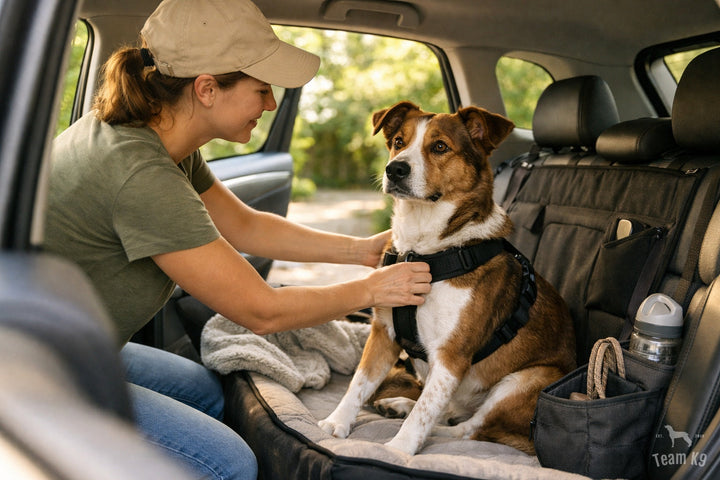
If you are driving home from a trail, beach, or park, do a quick coat and collar check before loading up. Wipe the worst area first, keep a towel in the car, and give the ride home a protected landing zone instead of letting the smell soak into fabric.
That is where setup matters. A waterproof backseat barrier helps when the outing goes sideways, and a rinse-off plan helps when wiping is not enough.
Protect the ride home and make cleanup easier
These products do not stop rolling behavior. They make the aftermath easier when the smell still wins one round.
 Hard Bottom Car Seat Cover
Creates a protected ride-home surface when the trail smell follows your dog into the car.
Hard Bottom Car Seat Cover
Creates a protected ride-home surface when the trail smell follows your dog into the car.
 Outdoor Dog Bath & Pool
Useful for quick backyard rinse-offs after mud, trail grime, or the wrong smell jackpot.
Outdoor Dog Bath & Pool
Useful for quick backyard rinse-offs after mud, trail grime, or the wrong smell jackpot.
 The two-towel reset
Use the quick wipe-down sequence before your dog brings the whole smell into the back seat.
The two-towel reset
Use the quick wipe-down sequence before your dog brings the whole smell into the back seat.
Do not punish curiosity. Build a cleaner exit.
If every interesting smell turns into conflict, your dog may just learn to dive faster. What usually works better is making disengagement clear, early, and worth it.
That means your job is not “never let the dog sniff.” Your job is “teach the dog that leaving a questionable smell when I ask does not end the fun.”
If the outside world is already hard for your dog, it also helps to sharpen your read on body language before the walk gets messy. Use How To Stress Check Your Dog Before Behavior Escalates and Understanding Your Dog's Body Language to catch earlier signals before arousal, stress, or scent obsession stacks up.
Rolling in bad smells FAQs
Why does my dog keep rolling in dead things or gross smells?
Usually because the scent is highly rewarding, instinctive, or stimulating. The behavior often starts with intense sniffing before it becomes a full roll, which is why early interruption works better than reacting late.
Should I stop my dog from sniffing on walks?
No. Normal sniffing is healthy enrichment. The goal is to allow safe sniffing while interrupting the moment when interest turns into rubbing or rolling.
What cue should I use to stop the roll?
Use one short cue such as “this way,” “leave it,” or “let’s go,” then reward your dog the second they follow. The timing matters more than the exact wording.
What if my dog already rolled in something foul before getting in the car?
Do a quick coat check, wipe the worst area first, and protect the back seat before loading up. If the substance could be toxic, irritating, or unsafe to ingest, contact your veterinarian for guidance.
Does gear solve this behavior by itself?
No. Gear helps with cleanup and transport. Preventing the roll still depends on timing, redirection, route management, and giving your dog a cleaner sniff routine.


 “Hair and mud end up all over my back seat”
 “My dog pulls on every walk”
 “I want control without a bulky vest”



Leave a dog-parent field note
Share what your dog does, what you already tried, or what you wish this guide covered. Notes are moderated before they appear.
Send the Team K9 crew the dog behavior, car setup, walk problem, or routine question you want covered next.
Email a field note