


There is a particular kind of road-trip scramble that happens five minutes before you leave. The dog is excited, the car is half packed, somebody cannot find the leash, and the water bowl is still on the kitchen counter. A small packing routine makes the whole day easier.
This is a practical guide for a dog who is riding along for a day trip, a weekend away, or a longer drive. It is not about buying a pile of new gear. It is about putting the few things that matter where you can reach them when your dog needs them.
Start with the ride, not the destination
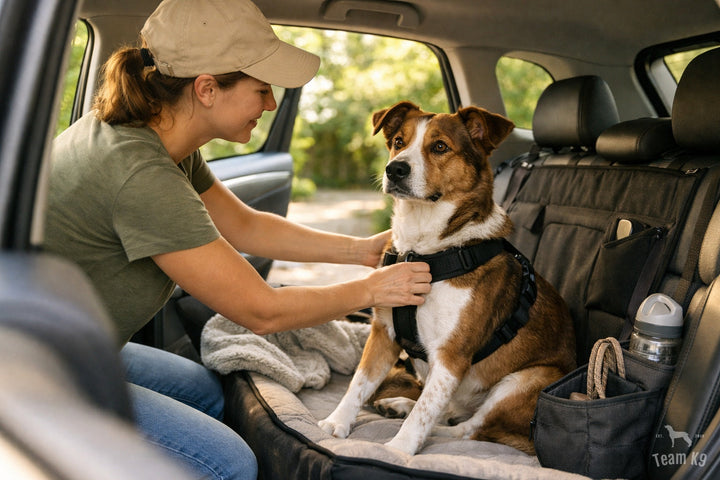
Before you load the snacks or choose a playlist, set up the spot where your dog will ride. Clear loose bags from the back seat or cargo area. Give your dog enough room to settle without putting a cooler, shoes, or a suitcase where they will slide around. Keep the setup familiar if you can. A blanket that smells like home and the same place to lie down can make the first hour feel less strange.
If your dog rides in the back seat, a cover can make cleanup simpler after wet paws, fur, and rest-stop grit. The Team K9 hard-bottom car and truck seat cover has a hard-bottom support platform, waterproof fabric, side flaps, storage pockets, headrest straps, seat anchors, and a mesh window. Its included safety belt is designed to clip to a body harness. Check the fit in your own vehicle before the trip, then give your dog a few quiet minutes to get used to the space while the car is parked.
Keep the driving area clear. A dog that is unsettled, carsick, unusually quiet, or struggling to breathe needs your attention, not a tip from a blog. Pull over safely and contact a veterinarian if you are concerned.
Pack one small bag that stays within reach
The best travel bag is the one you can grab without unpacking the trunk. Put it behind the passenger seat, in a door pocket, or in the cover storage pocket if that is where it stays put in your car.
- Leash and ID: Bring the leash you use most, a backup if your dog is hard on gear, and make sure ID information is current.
- Water and a bowl: Bring familiar water and a collapsible bowl. Offer small drinks during breaks rather than waiting until your dog is frantic.
- Regular food and familiar treats: Portion what you need before you leave. A travel day is not the time to introduce a new chew or a bag of mystery treats from a gas station.
- Towels and cleanup supplies: A towel, waste bags, paper towels, and a sealed bag for the wet stuff solve more problems than they take up space.
- Any prescribed medication and relevant records: Keep them where an adult can find them quickly. If your destination has entry rules, confirm them before departure.
- A recent photo: Save one on your phone before you leave. You hope never to use it, but it is much easier than hunting through a camera roll in a stressful moment.
Think of this bag as the road-trip version of the entryway reset. You are making it easy to do the right thing when everyone is tired.
Make the first stop a real break
Do not wait for the perfect scenic overlook. Stop when your dog needs a chance to stretch, drink, and sniff in a secure area. Keep the leash on before a car door opens, even if your dog usually waits nicely at home. A new parking lot has new noises, smells, traffic patterns, and reasons to bolt toward something interesting.

Let the break be more than a rushed potty stop when the place is safe. A few relaxed minutes of sniffing gives your dog something to do besides stare at a windshield. Then offer water, check paws for anything picked up outside, and settle back in before everybody is overheated or impatient.
For the walk from car to rest area, choose handling gear your dog already knows. The Team K9 upgraded tactical harness has four quick-release metal buckles, reinforced front and back leash attachment points, adjustable straps, a top handle, and reflective strips. If you use the front attachment point, keep it high near the neck as designed and make sure the harness is properly fitted before the trip. The double-handle tactical bungee leash gives you an everyday handle plus a closer handle near the clip when a parking lot or trailhead calls for shorter guidance.
Give your dog a job during the drive
Some dogs fall asleep before the first exit. Others keep popping up because every turn, brake light, and new sound feels important. You cannot force a dog to enjoy a long drive, but you can lower the number of surprises.
- Load up in the same order each time: leash on, water bag in place, dog settled, doors closed.
- Keep the car temperature comfortable and air moving. Watch your dog, not just the thermostat.
- Use a familiar blanket or durable toy only if your dog can enjoy it safely without turning it into a wrestling match.
- Keep windows managed. A tiny crack may work for one dog and be distracting for another. Do not let your dog hang their head outside a moving car.
- Save the high-energy play for the stop. The ride itself can be the quiet part of the day.
If car rides have been rough in the past, start smaller. A ten-minute drive to a pleasant place can help you learn what makes your dog more comfortable before you ask for a full travel day. Our guide to helping a dog feel better in the car has a simple routine for building that confidence one ride at a time.
Plan for the boring problems before they become big ones
Road trips rarely go sideways because you forgot a fancy accessory. They go sideways because a wet dog needs a towel, a car door opens before the leash is clipped, or a bag with food and medication is buried under luggage. Give those moments a place in the plan.
Before departure, look up a veterinarian near your destination and save the number. Check your route for dog-friendly stops where you can park away from moving traffic. If your dog is prone to stress, travel sickness, heat sensitivity, or has a medical condition, get individual travel guidance from your veterinarian before you leave.
When you arrive, take one minute before unloading everything. Clip the leash on, open one door at a time, bring out the water bag, and give your dog a quiet look around. A slower first minute prevents the kind of frantic first ten minutes that makes everybody regret leaving home.
A quick checklist before you back out
- Dog is in the planned riding space and the floor is clear.
- Leash, ID, water, bowl, food, towels, waste bags, medication, and a recent photo are reachable.
- Your destination and nearest veterinary option are saved.
- You have chosen a realistic first break instead of waiting until someone is desperate.
- You have checked the weather for both the drive and the destination.
That is enough. Your dog does not need a perfectly styled travel kit. They need a predictable place to ride, a few familiar things, and an adult who has not packed the essentials under three suitcases.
Road-trip questions dog owners ask
How often should we stop on a dog road trip?
There is no one interval that fits every dog. Plan breaks around your dog’s age, health, comfort, weather, and usual bathroom routine. Watch for restlessness, panting, repeated repositioning, or clear signs that your dog needs a break, and adjust the plan.
Should my dog ride in the front seat?
Follow your vehicle manufacturer’s safety guidance and consider the risks from passenger airbags. A back-seat setup gives you more room to make a stable dog space and keeps the driver’s area clearer.
What should I do if my dog is uneasy in the car?
Make the next ride smaller, keep the setup predictable, and speak with your veterinarian if the problem is frequent or severe. Do not assume your dog will simply get used to distress on a longer trip.
What is the one thing people forget most often?
A reachable water setup. Put water and a bowl where you can use them at the first stop without digging through the trunk.
For another small routine that keeps travel gear from taking over the house, read the 10-minute dog gear reset. Then pack the bag, take the slower first stop, and enjoy the part where your dog falls asleep halfway through the drive.


 “My dog slides into the footwell”
 “Hair and mud end up all over my back seat”
 “My dog pulls on every walk”




Leave a dog-parent field note
Share what your dog does, what you already tried, or what you wish this guide covered. Notes are moderated before they appear.
Send the Team K9 crew the dog behavior, car setup, walk problem, or routine question you want covered next.
Email a field note